
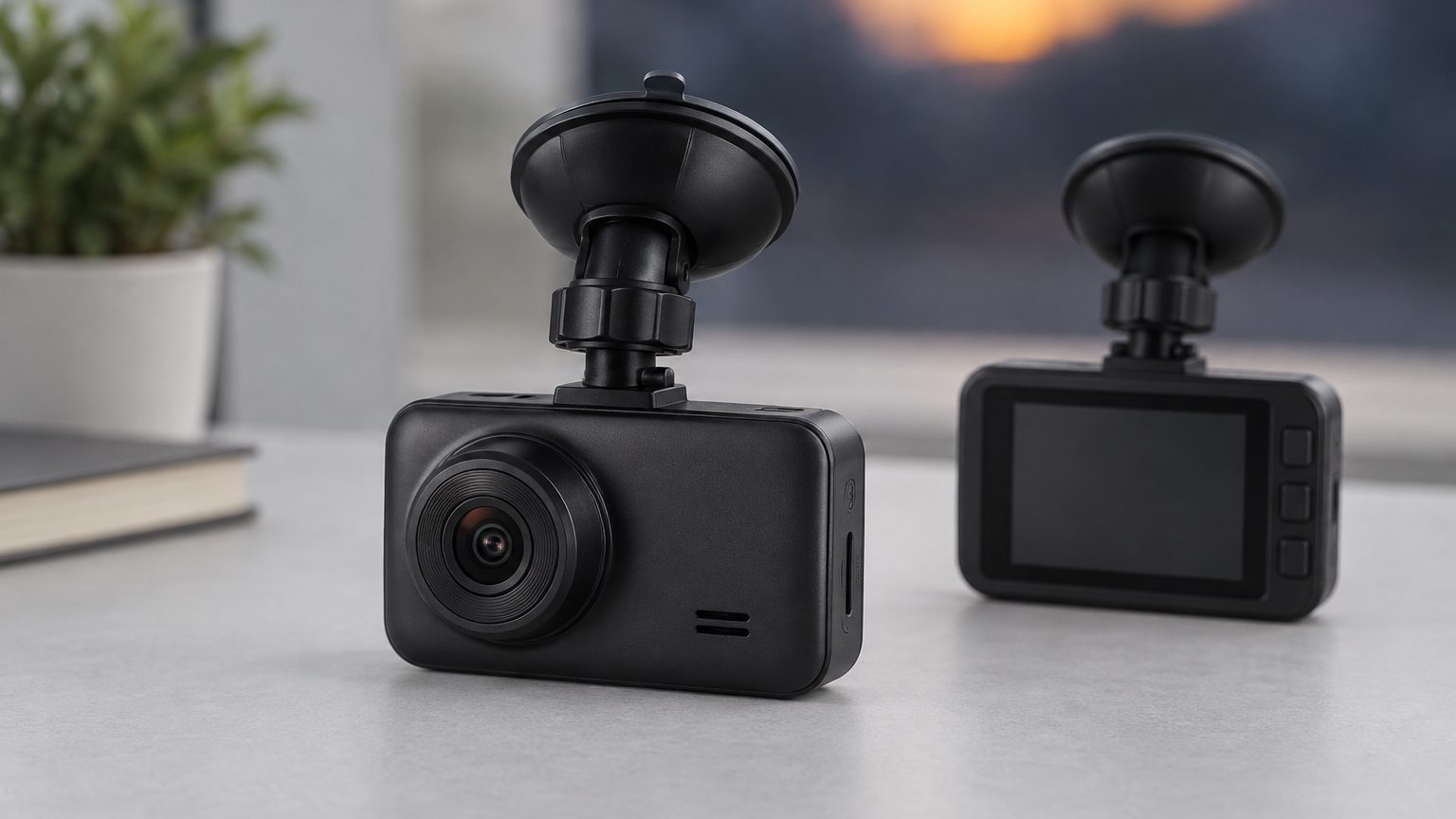
Where 1080P fits in a range
Full HD recording is no longer the headline spec, but it remains the largest entry point for buyers who simply want evidence on the road without a long spec sheet. A 1080P unit is the first model in most dash cam ranges because it is easy to explain: it records, loops, locks a clip on impact and comes with a simple mount. Corporate gifting, promotional bundles, first-time owners and cost-conscious fleets all start here. The role of this line is volume and reach, while the 4K line carries the upgrade story above it.
Platform and image quality
Image quality at 1080P depends more on the sensor, the lens and the tuning than on the resolution number. Rear cameras on dual units commonly use a 2-megapixel GalaxyCore GC2053-class sensor at 1080P, and front platforms vary by model. The sheet should therefore name the sensor, the aperture class, the field of view and whether WDR or HDR is on, since those decide plate readability and how the unit handles sun glare and tunnels. Different 1080P units from different partner factories can look very different in the same clip, which is why sampling matters more than the label.
| Spec line | Typical for entry units | What to confirm |
|---|---|---|
| Resolution | 1920 x 1080 at 30fps class | Frame rate and bitrate setting |
| Core functions | Loop recording, G-sensor lock, parking monitor | Which parking mode, if any |
| Image processing | WDR or HDR on many units | Behavior in glare and tunnels |
| Screen | Small LCD or screenless | Menu language list |
| Power | Supercapacitor or small battery | Heat tolerance and shipping class |
| Storage | microSD, loop recording | Card size limit and endurance class |
Variants
The line comes in three common shapes. A basic single-channel unit with a small screen covers gifts and promotions. A dual-channel kit adds a rear camera for a wider evidence story. A screenless, WiFi-connected body pairs with a phone app for buyers who prefer a smaller device. Each can run with or without GPS, and each can be bundled with a 64GB card to avoid the support burden of mismatched cards. Because the unit is simple, choosing a platform that stays in production across reorders matters more than chasing a new feature.
Who buys it and why
Online sellers use it as the traffic-driving model in a range, with the 4K unit as the step up. Distributors place it in the entry slot on a shelf. Corporate gifting and loyalty programs value the low commitment and the room for a printed logo and a branded box. Small fleets and delivery businesses choose it for large vehicle counts where the goal is a recorder in every cab rather than the top image. A problem-led brief helps: if the buyer's concern is insurance disputes, a dual-channel unit may serve better than a better single lens.
Choosing between 1080P and a step up
A simple rule works for most briefs. If the customer's goal is a recorder in every vehicle, stay at 1080P and spend on a better card and a hardwire kit. If the goal is readable plates at distance or a premium listing, move to 4K or a low-light model. Mixing the two in one range works well: 1080P brings in traffic, and a night vision model or 4K unit carries the margin.
Customization and packaging
Private label for this line commonly means your logo on the housing and boot screen, your box, manual and warranty card, and a bundled SD card. Shenzhen OEM suppliers commonly publish minimums from about 100 pieces per model for logo and packaging; firmware defaults and app branding sit higher and are quoted per project. Packaging for marketplace sellers can include marketplace warehouse labeling and carton marks per buyer. Read the steps on private label and packaging.
Certification notes
General information only; confirm with a compliance adviser or lab. Non-WiFi units follow FCC Part 15 declaration in the US and CE with EMC, low-voltage safety and RoHS in Europe, with WEEE marking where required. Units with WiFi need an FCC ID and RED. Models with a lithium battery need a UN38.3 test summary and a safety data sheet for air and sea shipping, which a supercapacitor model avoids. The producing factory or lab issues the reports.
Buyer checks before ordering
- Clip check. Day and night clips from the golden sample, sun glare and a tunnel pass.
- Function check. Loop recording, G-sensor lock, menu languages and boot screen.
- Burn-in. Continuous recording run per program before packing.
- Pack check. Accessories, mount, cable and manual against the sheet.
Typical stock-model bulk runs about 15 working days, with minimums and timing confirmed in writing per program on MOQ and lead time. Start with the quote form.