
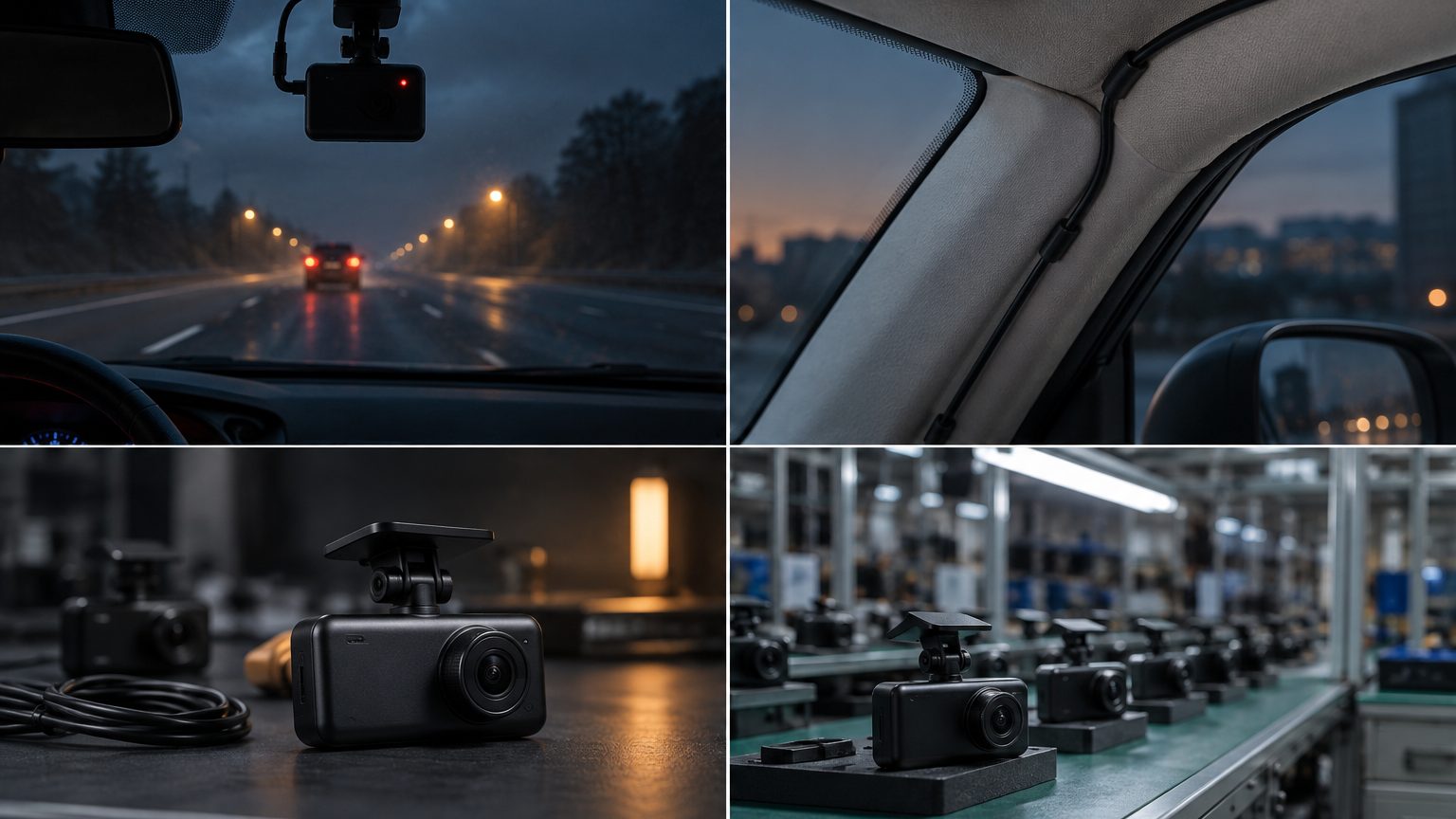
Why installers want a kit
Installers lose time on small things: a missing fuse tap size, trim tools that mark the plastic, a cable that is a little short. Each interruption costs minutes, and across a week those minutes add up. A consistent kit removes the guessing. For the shop, it shortens each job and gives the same result from different staff. For the distributor who sells to shops, it creates a repeat-purchase item: the camera sells once, while consumables such as pads, clips and taps are reordered. For retail buyers, a kit marketed as "everything for a clean install" turns a difficult-looking job into a manageable one.
What goes in the box
| Component | Purpose | Packing note |
|---|---|---|
| Hardwire cable | Constant and switched power, low-voltage cutoff | 12V, or 12V and 24V; connector matched to the camera |
| Fuse tap assortment | Fits mini, low-profile mini, micro and standard slots | Bag with labelled sizes |
| Spare fuses | Replace originals in common ratings | Separate small bag with a rating card |
| Ground ring terminals | Attach the ground lead to a chassis bolt | Several sizes |
| Plastic trim tools | Lift pillar trim without marks | Two or three shapes |
| Cable clips and sleeves | Hide and protect the cable | Adhesive-backed clips; spiral sleeve for flex points |
| Spare adhesive pads | Re-mount the camera | Enough for repeated attempts |
| Cleaning wipes | Prepare the glass | Individually wrapped |
| Test light | Identify live slots | Optional; a small tester is useful |
| Instruction card | Method and safety points | Printed in the buyer's language |
Three kit levels
Buyers rarely want one kit. A typical programme offers three, each serving a different shop or customer.
- Basic kit: socket cable, clips, trim tool, pad and wipes. For drive-time recording and DIY customers.
- Parking-mode kit: hardwire cable with cutoff, fuse tap assortment, spare fuses, ground terminals and the basic tools. For shops that fit parking mode.
- Fleet or truck kit: a 12V and 24V capable hardwire cable, extended rear cables, sleeves and a larger set of clips. For vans and heavy vehicles; see truck installation.
Each level can be sold alone or with a camera. Camera and kit bundles are described on the hardwire kit page, and the bundles that sell note looks at how to present them.
Training sheets that make the kit work
A kit is only as good as the sheet that goes with it. Installer shops value a one-page method card showing the sequence, the airbag warning, the fuse rating reminder and a test checklist. Add a vehicle chart on the back, to be filled in by the shop: model, fuse box location, constant slot, switched slot, ground point. Over a few months a shop builds its own reference, and the sheet becomes the shop's asset. Print it on a durable stock so it survives workshop use. Where the buyer sells in several languages, the desk can coordinate translated sheets as part of the packaging job.
Packaging choices
- Retail box. A compact box with a window, an icon strip showing what is inside and a compatibility panel.
- Shop pack. A plain carton with compartments, designed for workshop use, with larger quantities of consumables.
- Refill packs. Pads, clips and taps in small bags, sold to shops that run out fastest.
- Branding. Neutral or with your logo; the private label packaging page lists what can be printed.
Marketplace sellers can request warehouse labels on the master carton so the shipment moves quickly through receiving; see logistics and shipping.
How to plan a kit programme
- List the vehicles your customers install on: sedans, SUVs, vans, trucks.
- Define the levels and which parts each includes.
- Specify the parts by connector, fuse tap types and cable lengths.
- Request samples and test them on two or three different vehicles.
- Write the sheet and have a shop review it before printing.
- Confirm packaging and carton marks in writing.
- Order a pilot batch, then adjust before the main order.
Typical order sizes and lead times for accessories are explained in the MOQ and lead time reference; each figure is confirmed in writing for the programme.
What shops ask for first
Talk to a few installer shops before finalising a kit and the same wishes appear. They want the fuse tap assortment above all, because vehicle variety is their daily problem. They want trim tools that do not scratch, since a marked pillar is a conversation with the customer. They want a short, durable instruction card rather than a thick manual nobody reads. And they want refill packs of the parts that run out, not a new full kit each time. Build the first kit around these four points and it will be adopted; add the rest over time based on what shops actually reorder. A short call with two or three shops at the start of the programme is worth more than any assumption about what a kit should hold.
Quality checks on kit contents
Because a kit contains many small parts, the main risk is a missing or wrong item. Ask for a packing checklist and a sample count: each carton should hold the same number of kits, each kit the same contents. For hardwire cables, check the connector fit on the target camera, the cutoff settings and the fuse tap fit in a few sample fuse boxes. The desk coordinates checks with partner factories before shipment; see the quality control page. Installers also appreciate a kit that has been tested on real cars, not only on a bench.
Where to start
If you serve installer shops, begin with the parking-mode level, since that is where the largest accessory spend sits. If you are a distributor, add the basic kit as a low-barrier entry. Describe your vehicle mix and target channels on the distributors and installers page or through the quote form, and the desk will return a written kit proposal.