
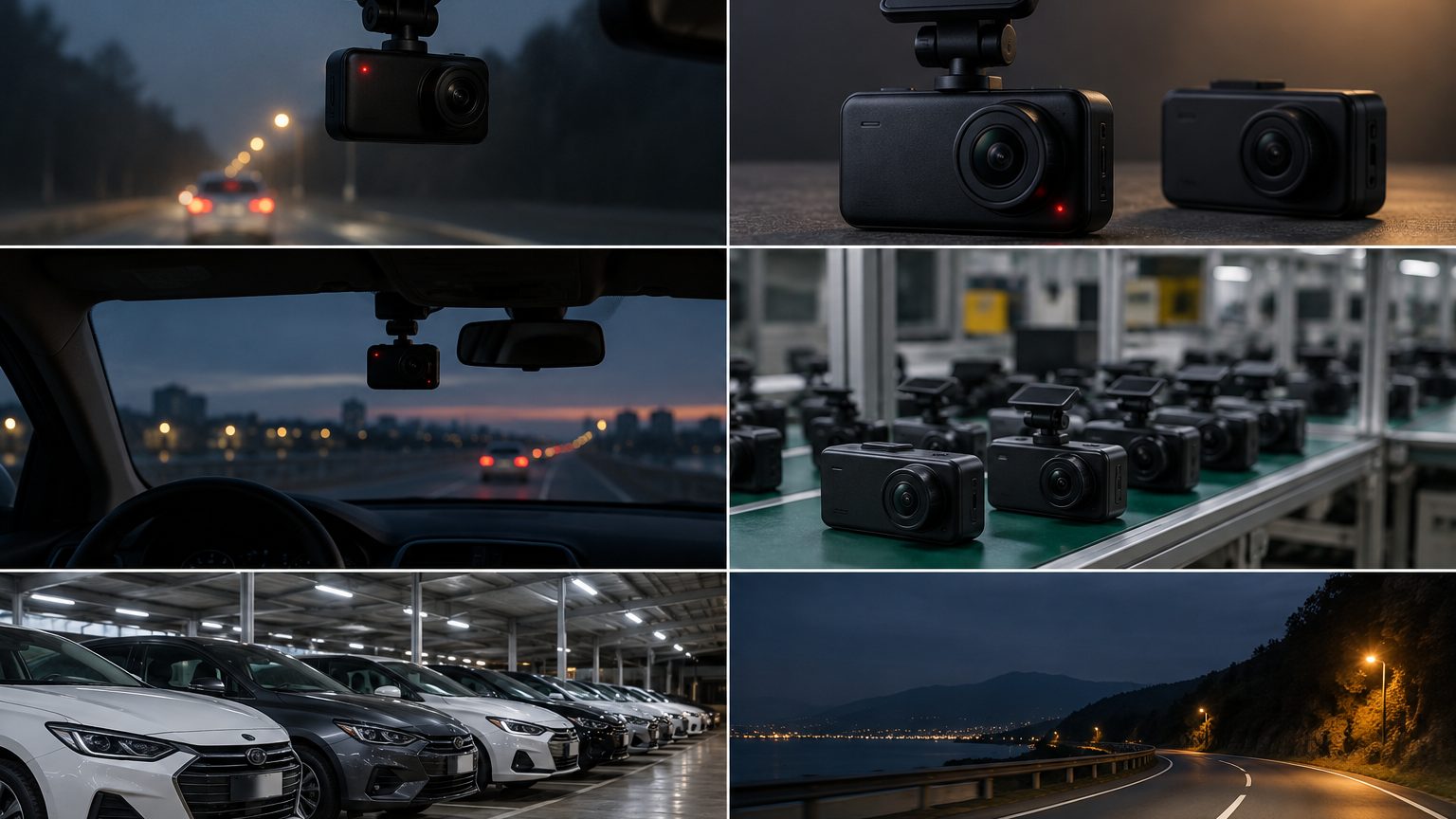
What rental and dealer programs have in common
A rental or subscription fleet has many drivers per vehicle over a year, and the owner wants evidence for damage, disputes and parking incidents. A dealer wants a factory-look accessory that adds margin to a vehicle sale. The two audiences differ in business model but share three needs: installation that is fast and repeatable, hardware that resists tampering, and branding that fits the company. Neither wants a screen that distracts the driver or an exposed cable that customers pull out.
Which product lines fit and why
The hidden mini is the natural line: it tucks behind the rearview mirror, has no screen, and is operated through a WiFi app or by buttons. A 4K single suits programs that value plate readability, and a dual unit suits premium rentals and subscription vehicles where rear incidents are frequent. All of them should be paired with parking accessories and a hardwire kit so that the camera keeps recording when the car is parked on a street or a lot.
| Program | Main issue | Configuration |
|---|---|---|
| Short-term rental | Damage disputes between renters | Hidden mini, hardwired, parking mode |
| Subscription fleet | Long-term vehicle condition | 4K dual, hardwired, GPS optional |
| New-car dealer accessory | Factory-look finish | Hidden mini or mirror, dealer-branded box |
| Used-car dealer | Test-drive and lot incidents | Hidden mini with parking accessories |
| Leasing partner | Standardized kit across makes | Same platform, cable lengths per model |
Installation, power and tamper resistance
For rental fleets, a permanent hardwired install is better than a plug-in unit that a renter can unplug or take. The kit powers the camera from the fuse box with a cutoff that protects the vehicle battery, and the unit is routed along the A-pillar and headliner. For dealers, the same kit lets the camera be fitted at delivery inspection. The desk fixes cable lengths per vehicle platform and checks the packed kit; parking mode behavior and cutoff voltage are set so that cars standing for days do not return with a flat battery. See the hardwire kit line.
Privacy and notice
Recording renters and customers raises notice and consent questions. Many places expect a visible disclosure, and audio recording rules vary widely; some rental firms disable audio altogether. Rules vary by country and state, so check local law and the rental terms. The desk gives general information only and can set firmware defaults, such as audio off, once the owner decides the policy.
Fleet management after installation
Rental and subscription fleets turn over vehicles, so a camera program needs a plan for removal and reuse. Hidden mini units are easy to move to the next vehicle if the mount and cable are standardized; hardwired kits need an exit step so fuse taps are restored when a car leaves the fleet. Keep a spare-parts stock of cards, mounts and cables, and set a routine for checking cards, because a card that has stopped recording looks identical to a working one. A small card health check at each service visit is cheap compared with discovering the gap after an incident. Dealers can offer the same check as part of an aftersales plan.
Customization and branding
Dealers and rental brands usually want their own name on the product: logo on the housing and boot screen, a retail or dealer box, a manual with the program's support contact. This is private label, commonly published by Shenzhen OEM suppliers from about 100 pieces per model. A branded WiFi app or locked firmware menu is an OEM project quoted separately; see private label packaging.
Procurement path, MOQ and shipping
A typical rental or dealer program starts with sample sets installed on a few vehicles in the bay, followed by a golden sample and a first batch sized to the next quarter's fleet additions or vehicle sales. Samples ship in days from stock or take about 7-15 working days when custom; stock-based batches run about 15 working days and custom programs about 25-45 days after sample approval. These are typical reference ranges, confirmed in writing for each program on MOQ and lead time. Bulk usually travels by sea from Yantian or Shekou, with cartons marked per branch or dealership.
An illustrative example: a dealer group installs hidden mini cameras on twenty delivery vehicles, tracks install time and customer feedback, and then adds the kit to its standard accessory menu. Share your brief through the quote form.