
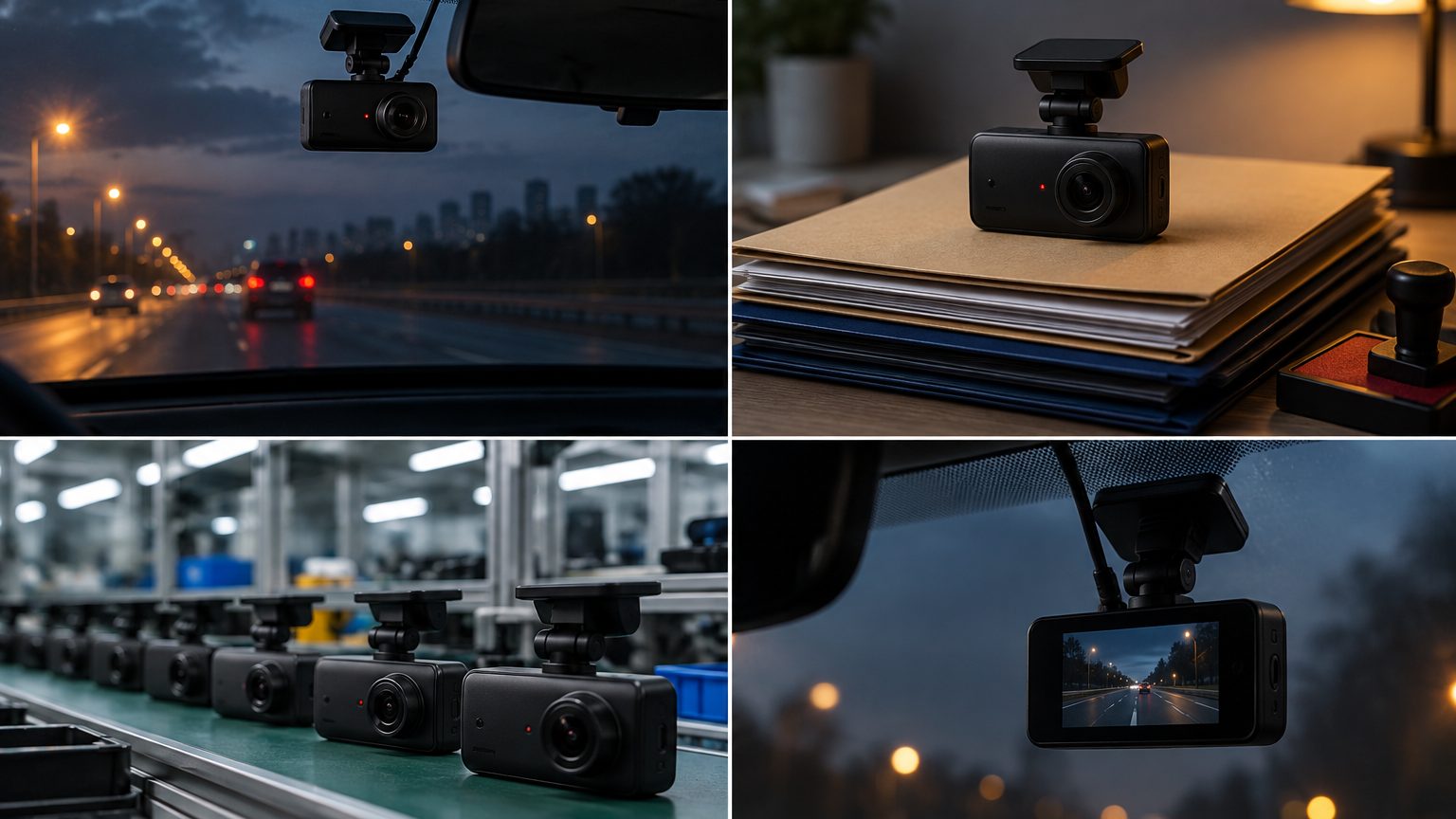
The short answer
Vehicle regulations in many countries and states restrict objects that obstruct the driver's view through the windshield. Some set out specific areas where small devices may be fitted, such as behind the rearview mirror or in a lower corner. Others use general language about "material obstruction" without defining a zone. The wording, the size limit and the enforcement all vary. For sellers, the useful response is not to memorize each jurisdiction but to design and document placement that keeps the dash cam small, out of the main sweep of the wipers and out of the driver's central view, and to tell customers to check current local rules.
Why regulators care
The basis is simple road safety: anything between the driver's eyes and the road, or covering the area that the wipers clear, can reduce view. Some rules also relate to vehicle inspection items, airbag deployment zones and sensor areas used by driver assistance systems. A dash cam placed in front of a lane camera, rain sensor or windshield-mounted radar area can interfere with the vehicle's own safety features, regardless of any law. That is a product-use issue sellers should mention in the manual.
Typical placement logic
| Position | Pros | Cautions |
|---|---|---|
| Behind the rearview mirror, passenger side of center | Hidden from the driver's main view, good field of view | Check sensor and rain-sensor zones; keep glass clean for the lens |
| Top center, above the mirror line | Usually within the wiper sweep and out of sight | Tint strip and sun visor clearance; keep cables tidy |
| Lower corner of the windshield | Permitted in some places as a defined zone | Narrower field of view and awkward cable routing |
| Dashboard top | No windshield contact | Reflections and heat; image quality may suffer |
These are practical patterns, not legal positions. Some regions describe permitted zones in centimeters or inches; those values are not repeated here because they differ and change. The placement guide covers the installer view in more detail.
Patterns sellers notice across markets
Without turning this note into a legal atlas, three patterns are worth knowing. First, strict defined-zone markets tend to allow a small device behind the mirror or in a lower corner, and enforcement is mostly at vehicle inspection. Second, general-obstruction markets rarely trouble a palm-sized unit placed sensibly, but a large screen covering the center of the glass draws attention. Third, several markets have tightened rules as dash cams and phone holders spread, so a placement that was tolerated years ago may not be today - one more reason to instruct customers to check current rules rather than rely on forum posts. Where a market is known to you as strict, steer the range toward compact no-screen or hidden designs; see hidden and mini dash cams.
Mount types and their rule implications
The mount you choose affects both placement freedom and compliance. Adhesive mounts hold a fixed position and tend to sit flatter against the glass, which can help keep the unit small in the driver's view. Suction mounts allow repositioning but may sag in heat and are more visible. Mirror-mounted units, which clip over or replace the rearview mirror, avoid the windshield altogether in some designs, though they bring their own safety and visibility points; see mirror dash cam pros and cons. A broader comparison is in dash cam mount options.
Hidden and mini models are designed to sit behind the mirror with minimal footprint, which usually suits the strictest placement rules; see hidden and mini dash cams.
What sellers and installers should do
- Choose a compact design where the target market is known to be strict about windshield objects.
- Print placement guidance in the manual: keep out of the driver's central view, clear of sensors and outside the airbag area.
- Include cable clips and routing advice so cables do not hang across the view.
- Use neutral wording in listings: "compact mount" rather than "legal in all regions".
- Brief installers to confirm local rules and the vehicle's sensor layout before fitting; see installation kits for installer shops.
Commercial vehicles and special cases
Trucks, vans and buses have different windshield geometry and sometimes different rules. Large windshields and high seating positions change what is in the driver's view, and some commercial programs specify mounting positions by vehicle type. Motorcycles do not use a windshield in the same way; see motorcycle dash cams. For fleets, build the placement specification into the installation instructions, then verify it on the first vehicle of each type, as described in installing dash cams in trucks and vans.
Placement and ADAS sensors: a growing interaction
Modern windshields host more than the driver's view. Rain sensors, lane cameras and heads-up display zones sit in specific areas of the glass, and a mount pressed over any of them can disable a warning or smear a projection. This is separate from any mounting law, and it is becoming the more common real-world problem as driver assistance features spread to mid-market cars. The working rule for installers: identify the sensor band first, place the camera clear of it, and test that lane and rain functions still operate after fitting. Sellers who ship into markets where newer vehicles dominate should expect installers to ask about sensor clearance, and should be able to state the mount footprint of each model so the question can be answered before the unit arrives.
Documenting placement in a program
If you order custom packaging or a branded manual, ask the factory to include a short placement page with a diagram and a line telling users to follow local rules. It costs little at the artwork stage and removes a common point of confusion; see private label packaging. The broader legal picture is outlined in are dash cams legal, and the quote form is the place to mention markets with strict placement rules so we can suggest compact models.